
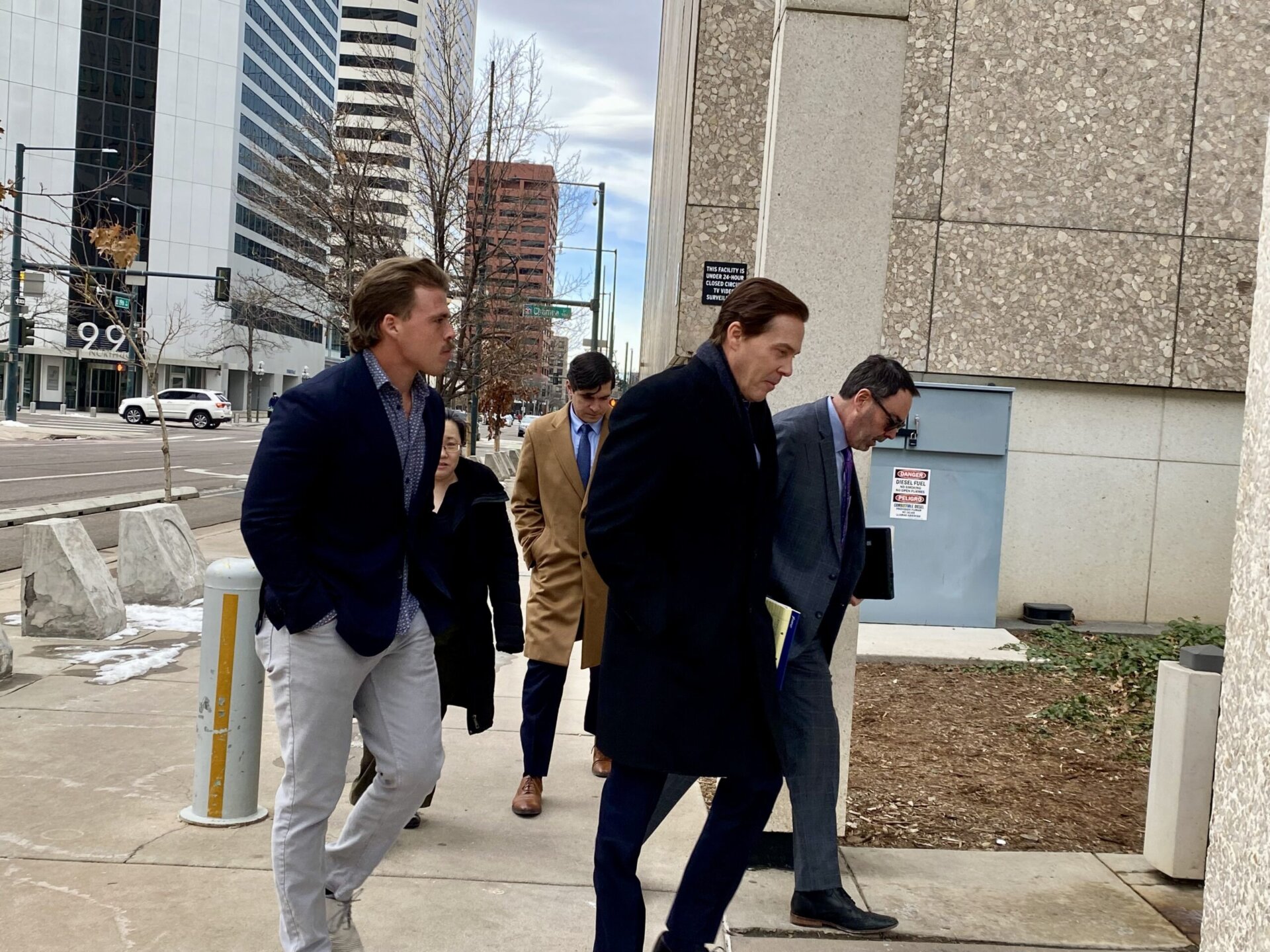

Brian Watson has asked a federal judge not to bar him and his Denver development firm from selling investments and to not fine them $15 million, saying the penalty sought by the U.S. Securities and Exchange Commission is “draconian.”
“A sweeping bar that leaves a 54-year-old first-time defendant with no means of practicing the only profession he has known since 1993 (adding nothing to investor protection) inflicts unnecessary pain,” attorneys for Watson explained in a court filing Monday.
“The conduct was serious — the jury said so, and the defendants accept that – but on the spectrum of securities fraud it sits far from the cases in which courts impose maximum penalties,” the lawyers wrote to U.S. District Judge Gordon Gallagher.
Watson and Northstar Commercial Partners, the firm he founded in 2000 and solely owns, were sued by the SEC in 2022. The agency accused him of misleading hundreds of investors in 11 real estate projects by vowing to invest his own capital in the projects and not doing so.
A weeklong civil trial played out in January. When it ended, a jury found that he and Northstar committed two civil counts of securities fraud. Gallagher will now punish them.
In May, the SEC asked the judge to do so harshly: $13 million in fines for Northstar, $2.6 million for Watson, plus a lifetime ban on selling securities, except in Watson’s personal portfolio.
“The SEC’s motion asserts, as though adjudicated, that investors lost at least $40 million,” Paul Vorndran, a Watson and Northstar lawyer, wrote Monday. “The jury found no such thing.
“Whatever investors ultimately lost, in whatever amount, the record does not establish that (Watson’s coinvestment) misrepresentations — rather than the pandemic, receivership or ordinary real estate market risk — caused it,” Vorndran told Gallagher.
Northstar made $2 million in fees on the 11 real estate projects in question, so fines of several times that would be preposterous, its lawyers say. And, as Watson testified at his January trial, a court-appointed receiver, put in place because of an unrelated lawsuit filed by Amazon, “completely dismantled” Northstar while controlling it for 926 days, causing investor losses. That, too, makes the fines overzealous, Vorndran argues.
“The SEC relies on relics of (Watson)’s past wealth — a jet, former homes in Cherry Hills and Mexico, a ranch investment and a 2018 political contribution — but the relevant inquiry is the defendants’ financial condition now,” he explained, before giving examples.

“Liabilities exceeding assets by tens of millions of dollars; just $457 in personal cash; a residence in default with more than $4.5 million in negative equity; no aircraft or other real estate; a 401(k) subject to seizure for unpaid taxes,” Watson’s lawyer listed.
Watson and Northstar believe a fine closer to $1 million would be appropriate. And rather than a lifetime ban of selling securities, a brief ban or simply an injunction requiring them to be honest with investors would suffice to protect the public, according to the defendants.
“There was no Ponzi scheme, no theft, no diversion of investor funds, no fabricated financials, no misstatement about the assets themselves,” lawyers for Watson and Northstar reminded the judge this week. “No financial mismanagement, embezzlement or improper fees.
“What the SEC seeks here … is not a tailored prophylactic,” they complain. “It is the permanent termination of a 33-year career in commercial real estate investment.”