
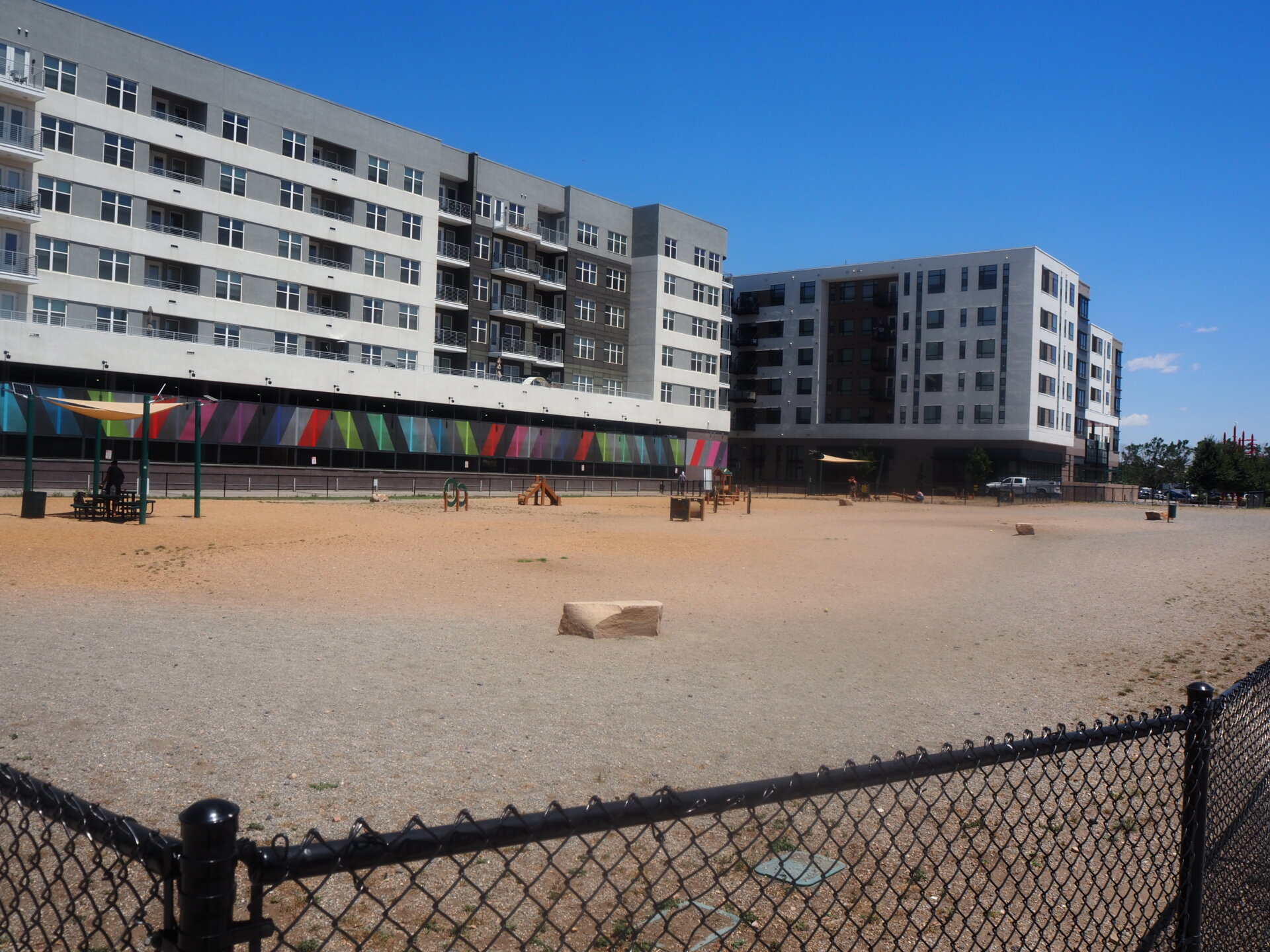

A dog park in the Baker neighborhood is on the brink.
Broadway Bark takes up an acre at 363 S. Broadway in Denver, just south of Alameda Avenue. It’s within Broadway Park, a 75-acre site that features stand-alone restaurants, big-box stores and, increasingly, apartment buildings.
Denver has 17 city-operated dog parks. But Broadway Bark, which opened two years ago, is operated by a metro district created to help develop Broadway Park.
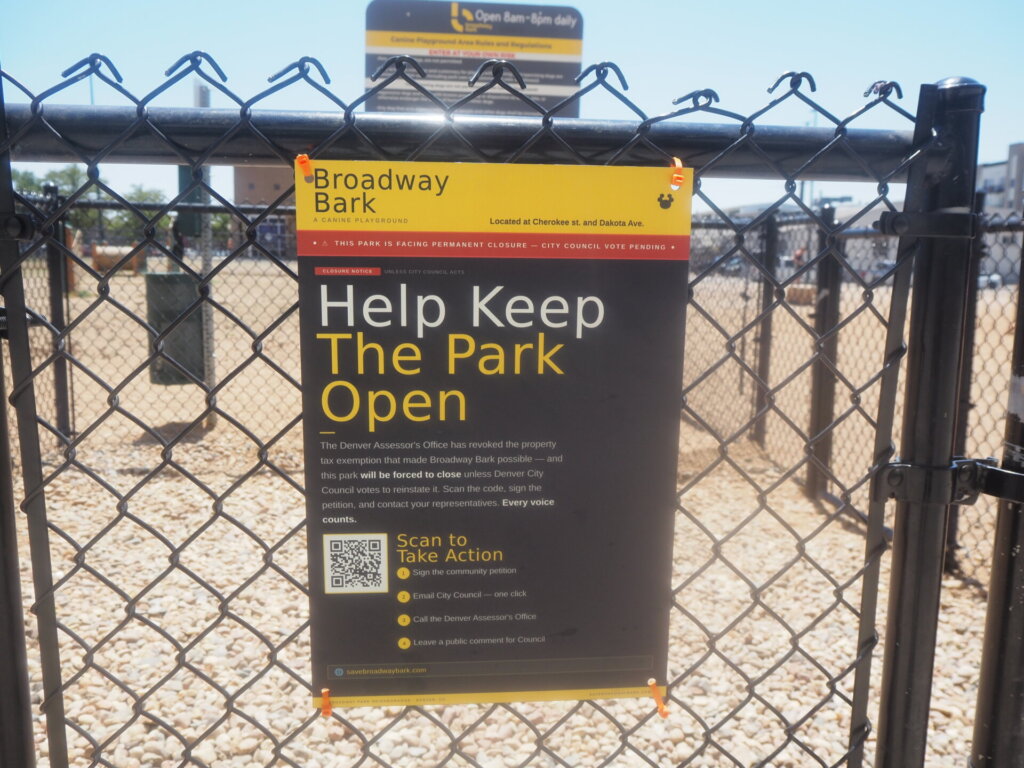
And D4 Urban, the Denver-based master developer of Broadway Park, is warning that the dog park may have to shut down.
“Without an exemption, there is no park,” said Dan Cohen, D4 Urban’s CEO and a board member of Broadway Park’s various metro districts.
Cohen and other D4 Urban partners own the dog park’s land and have leased it to the metro district for $1 a year. Previously, they told the county assessor the land was used for public purposes, and they were automatically exempt from paying property taxes, which are $88,000.
That exemption helped offset dog park maintenance costs, according to Cohen.
Last year, however, the governor signed a law that scrutinizes situations in which metro district board members own land that is leased to the metro district. That change left Broadway Bark without an automatic exemption from paying property taxes.
Cohen hopes to restore the exemption. His request has landed before the Denver City Council.
At a council committee meeting Tuesday, members heard from a handful of people who say they and their dogs visit Broadway Bark frequently.
“I know like 15 or 20 people that I would consider friends just from going there all the time,” said Jordan Bentley, who lives a seven-minute drive away.
“We know our neighbors, which is really not a common thing in urban areas,” another speaker said.
Cohen told council members that the metro district spent hundreds of thousands of dollars building Broadway Bark. The site will eventually be developed. But the timeline on that is unclear and has been for years, he said.
“This is a really good model of what we should do for other vacant spaces,” said Caitlin Braun, executive director of the South Broadway general improvement district.
Councilwoman Flor Alvidrez, who represents the area, signaled her support.
“This is a very important part of my district,” she said.
The council committee voted 3-2 to recommend that the exemption be approved, suggesting the outcome is up in the air when the matter goes to the full council to make the final decision.
In voting no on Tuesday, Councilwoman Amanda Sandoval noted that the city is in a budget deficit.
“I don’t support this. I don’t like it,” she said. “It’s taking money from residents.”
Speaking to BusinessDen a day later, Cohen said he believes the council is supposed to weigh in on whether the land is used for a public purpose, not whether it wants to grant an exemption.
“Self-evidently, a park serves a public purpose if Denver spends millions to operate its own parks,” he said.
Cohen’s wary of his request — and others like it that may come up — going before the council, where it can be politicized.
“Our read of (the new law) is that council could designate the authority to someone else, so this can be an administrative process,” he said.
The tax exemption was a factor in the decision to create Broadway Bark, he said. And he’s worried other property others now might not make a similar decision.
“No developer or district is going to create one of these open spaces … if there is not certainty that there is the tax benefit,” Cohen said.